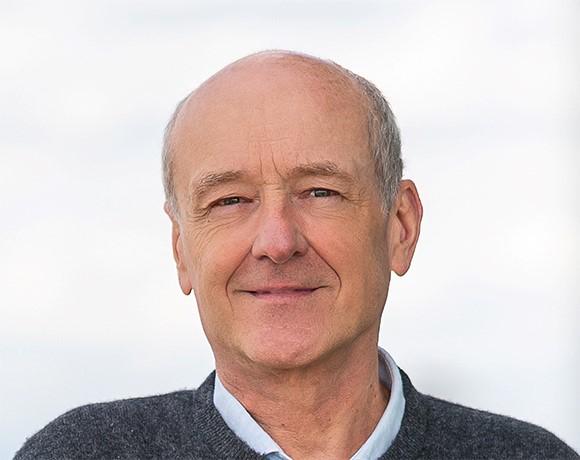
Peter Lansdorp was born and raised in the Netherlands. He was trained as a medical doctor at the Erasmus University in Rotterdam and obtained a PhD from the University of Amsterdam. In 1985 he moved to the Terry Fox Laboratory in Vancouver, where he worked on the purification and biology of human and murine blood forming stem cells. This work led him to studies of telomere biology for which he developed quantitative fluorescence in situ hybridization (Q-FISH) techniques. These techniques have become standard in the telomere field. In 2011 Peter Lansdorp became the first Scientific Director of the European Research Institute for the Biology of Ageing (ERIBA) at the University of Groningen in the Netherlands. In 2016 he returned to the Terry Fox Laboratory in Vancouver to continue work on development and applications of Strand-seq. Peter Lansdorp is a fellow of the Royal Society of Canada and a fellow of the Academia Europaea.
Dr. Lansdorp's main research interest has shifted from stem cell biology to telomere biology to current studies on the role of genomic variation in health and disease. For such studies his laboratory has developed a single cell DNA template strand sequence method (Strand-seq).
